
Table of Contents
Open Kitchen Safety Tips for Landlords and Tenants in HK
🎧 Listen to this article
More and more people are considering open kitchens, but in Hong Kong, most homes are small. Is it suitable for open or semi-open kitchens? What is the definition of an open kitchen? Can open flames be used? How can we ensure the safety of residents and comply with fire regulations? Let's understand together.
More people are considering open kitchens in Hong Kong's small homes. What defines an open kitchen, and can open flames be used safely while complying with fire regulations? Let's find out.
Definition of an Open Kitchen
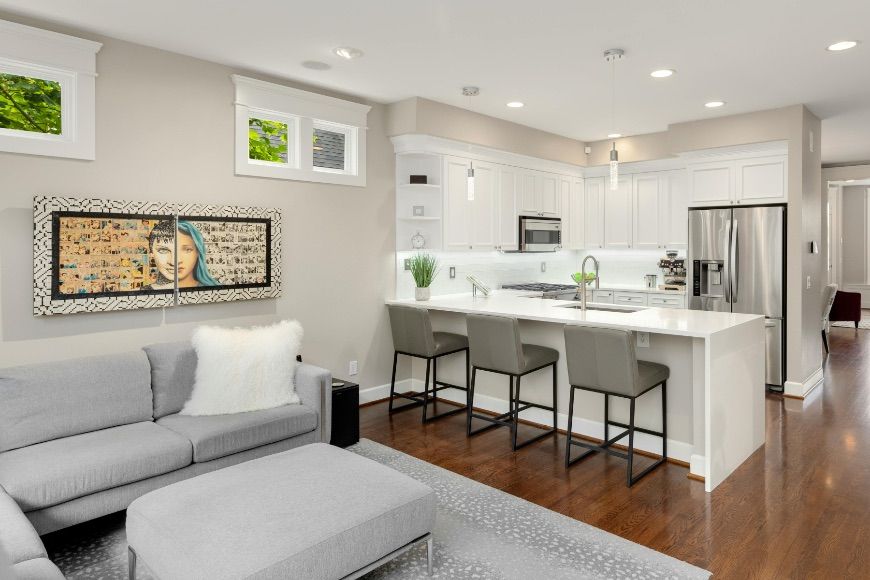
An open kitchen refers to a design where there are no partitions separating the kitchen from other living spaces, such as the living room or dining room. This means the kitchen is connected to the surrounding areas, creating a large open space.
Advantages of an Open Kitchen
- More Interaction: Allows for socializing while cooking.
- Enhanced Sense of Space: Creates a feeling of spaciousness.
- Improved Lighting: Better natural light throughout the space.
Cons of an Open Kitchen
- Noise and Odors: Cooking noises and odors can spread throughout the open space.
- Lack of Privacy: It's challenging to have personal space while cooking.
- Keeping Clean Can Be a Challenge: Kitchen mess is more visible.
Definition of a Semi-Open Kitchen
A semi-open kitchen is a design that falls between an open kitchen and a traditional closed-off kitchen. It typically separates the kitchen partially from other spaces, either through a wall, a window, or a low partition, while maintaining a degree of openness.
Advantages of a Semi-Open Kitchen
- Balances Privacy and Openness: Offers a middle-ground option between full openness and complete enclosure.
- Reduces Noise and Odor Dispersion: Better control over noise and odors compared to a fully open kitchen.
- Flexible Design: Can be adjusted based on family needs and preferences.
Cons of a Semi-Open Kitchen
- Less Spacious Feel: May not provide the same sense of openness.
- Design Challenges: Requires more planning to achieve the right balance of openness and separation.
- Potential Impact on Natural Light: Natural light flow may be somewhat restricted compared to a fully open kitchen.
Open Kitchen Requirement: Can You Cook with an Open Flame?
The use of open flames in open kitchens is a common concern, but it's not solely determined by kitchen design, whether open or closed. According to the "2011 Building (Fire Safety) Regulations," open kitchens can use open flames for cooking, provided specific conditions are met.
Firstly, if an open kitchen's design follows approved architectural plans that explicitly allow for open flame cooking, it's legal. The kitchen's original design must comply with fire and building codes for safety.
Secondly, while electric stoves are considered safer, both open flames and electric stoves carry fire hazards. Regardless of the cooking method, appropriate fire safety measures like firewalls should be installed in the kitchen to protect residents.
The "2011 Building (Fire Safety) Regulations" don't specify a particular stove type for open kitchens. As long as the cooking appliance is in a location with operable windows and relevant fire safety features, open flame cooking is an option. However, building regulations or bylaws in certain buildings may restrict open flame use.
How to Ensure Compliance with Fire Regulations in an Open Kitchen
To ensure compliance with fire regulations in an open kitchen, property owners should take some responsibilities and consider the following key points:
Consult Professional Advice: Before considering the transformation of a traditional closed kitchen into an open kitchen, landlords should seek advice from architectural professionals to understand whether the renovation involves structural elements, such as load-bearing walls.
Review Building DMC and Regulations: Landlords should review the Deed of Mutual Covenant (DMC) to determine whether such alterations are permitted. According to the Building (Planning) Regulations, qualified professionals must be hired for safety assessments, and details of the approved plans must be followed.
Submit Renovation Applications: If it is determined that the renovation does not involve structural elements, an application for renovation can be submitted to the Buildings Department, subject to approval.
Compliance with Building (Planning) Regulations: The design of an open kitchen must comply with the requirements of the Building (Planning) Regulations. For example, even in open kitchens with no windows, the natural lighting and ventilation area of the dining area (including the open kitchen) must be at least 1/16 of the floor area of the room.
Structural and Safety Considerations: If the renovation of an open kitchen involves removing load-bearing walls, it constitutes a structural alteration and may affect building safety. In such cases, strict safety assessments and approvals are required.
Fire Safety: For newly completed buildings with open kitchens, landlords must ensure that there is no alteration to the firewalls inside the units. In addition, smoke detectors and fire sprinkler heads inside and outside residential units should be professionally inspected regularly.
Considerations for Older Buildings: For existing closed kitchens, if the building lacks fire safety features such as fire sprinkler systems, renovations can be more complex and require approval from all landlords in the building, with no guarantee of success.
What to Check When Renting a Property with an Open Kitchen
When renting a residential unit with an open kitchen, it's essential to check the following aspects to ensure safety:
- Entrance Location: Ensure the unit's entrance isn't obstructed by the open kitchen, as it can pose a fire hazard.
- Smoke Detectors: Check for connected smoke detectors for early fire detection.
- Fire Sprinklers: Verify proper installation of fire sprinkler heads, connected to the building's fire suppression system.
- Firewall: A fire-resistant wall (at least 600mm wide, 30-minute fire resistance) should separate the entrance and open kitchen.
- Facility Maintenance: Regularly maintain and test fire safety facilities to ensure functionality.
- Fire System Connection: Confirm correct connection to the building's fire alarm system and communication center.
- Documentation: Review fire safety inspection reports to ensure compliance with regulations.
LesGetHome: More Rental Options in Hong Kong
Whether you opt for an open or semi-open kitchen, LesGetHome offers a convenient and efficient platform for landlords and tenants to list or find rental properties.
LesGetHome's standout feature is prioritizing user experience. We provide on-demand rental options, including commission-free choice, promising a great rental experience while reducing agent fees.
Ready to visit rental flats or list your own properties, sign up LesGetHome now.