
Table of Contents
Bathroom Heater Ventilation: Why Mold Still Grows
🎧 Listen to this article
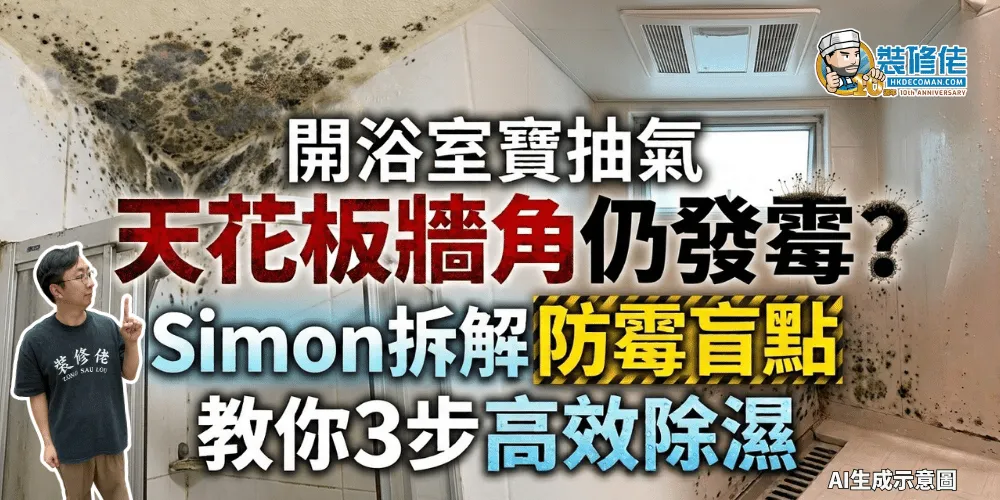
Many homeowners rely on the "ventilation/extraction" function of a bathroom heater after showering to dehumidify the bathroom. However, many people find that stubborn black spots and mold still keep appearing on the false ceiling, tile joints, and even the shower curtain, and sometimes even "mushrooms" grow.
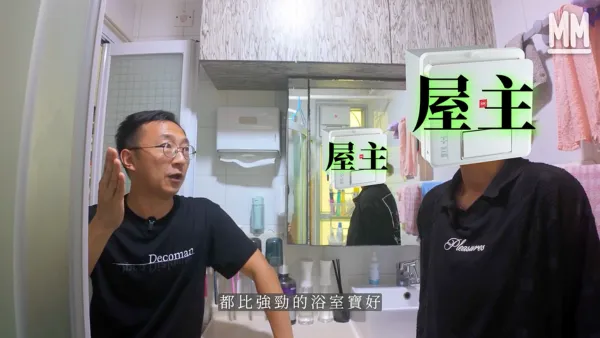
Earlier, Deco Academy principal Simon also discussed this in a new MM video. So where exactly is the problem? Could it be that the performance of the bathroom heater is insufficient? In fact, this often stems from a misunderstanding of how the bathroom heater works, as well as neglecting key mold-prevention steps. Deco Man will analyze the blind spots in bathroom dehumidification for you and provide efficient bathroom anti-mold solutions.

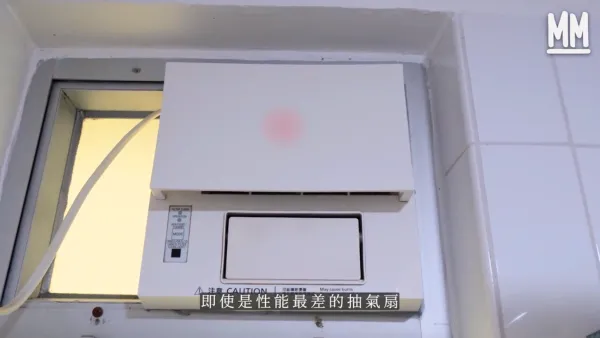
Screenshot source: Mill MILK YouTube Channel
Breaking Down the Limitations of the Bathroom Heater's Ventilation Function
Many people are used to directly turning on the "Ventilation" mode of the bathroom heater after showering, thinking that this can remove moisture. However, the underlying principle of the ventilation function is merely to drive indoor air convection, and its operating mechanism is similar to that of a traditional exhaust fan. For water vapor or odors suspended in the air, ventilation mode can indeed be effective; but for the "physical water vapor and water droplets" attached to the ceiling, wall tiles, and glass, the airflow of ventilation mode alone is simply too weak to evaporate the moisture in a short time.
When water droplets remaining on the ceiling or walls stay for more than a few hours, mold spores in the air will rapidly breed in this high-humidity environment, penetrating deep into material gaps and forming black mold spots that are difficult to remove later.
Simon Breaks Down the Causes of Bathroom Mold and Ventilation Blind Spots
Regarding bathroom dehumidification and mold issues, Simon pointed out that poor bathroom dehumidification results are often related to usage habits and air convection blind spots:
- The difference between exhaust fans and bathroom heaters: The ventilation capacity of a traditional exhaust fan is often several times stronger than the simple "ventilation mode" of a bathroom heater. If you rely only on the weaker ventilation airflow of the bathroom heater, the moisture removal efficiency will naturally be greatly reduced.
- Air convection from opening doors and windows: Simon reminds us that when using ventilation equipment, the key is to close doors and windows properly. If the bathroom door is left wide open during operation, the exhaust fan will only keep extracting the dry air from the living room, and the moisture inside the bathroom cannot be concentrated and discharged; if only the bathroom window is opened, although the area near the window may become drier, moisture will still accumulate in other dead corners of the bathroom. The correct approach is to close the doors and windows so that an efficient sealed ventilation cycle is formed inside the bathroom.
- Make good use of moisture-regulating materials as assistance: In addition to relying on appliances for dehumidification, Simon also mentioned that homeowners may consider placing diatomaceous earth (diatomite) products in the bathroom or surrounding environment, or installing breathing bricks. This type of moisture-absorbing material has a good microporous structure and can spontaneously absorb excess moisture from the environment and release it when dry, providing continuous and flexible humidity balance assistance for the bathroom.
⬆️ Screenshot source: Mill MILK YouTube Channel
3-Step Efficient Physical Dehumidification and Mold Prevention Steps
To completely say goodbye to bathroom mold, relying solely on running the drying mode of the bathroom heater for a long time can easily create an electricity bill burden due to its high power of one to two kilowatts (W). Combining Simon's and housework experts' suggestions, the best approach is "physical water removal as the main method, mechanical assistance as supplementary":
- Rinsing and physical water scraping: After showering, the walls and floor retain sebum, soap residue, and other mold nutrients, and the overall temperature is relatively high. It is recommended to first rinse the bathroom walls and floor with cold water to lower the temperature and wash away dirt, then use a squeegee to scrape off large amounts of water droplets on the glass, tiles, and walls, and mop the floor dry. This can directly remove more than 80% of the moisture, greatly reducing the time and electricity needed for subsequent drying.
- Turn on drying mode to dry: If the bathroom does not have an exhaust fan installed, after completing physical water removal, close the bathroom door (leave a gap of about 1 to 2 cm at the bottom of the door to create negative pressure convection), and turn on the "dry clothes/drying" mode of the bathroom heater for about 30 to 60 minutes. Compared with directly turning it on to dry for several hours, this method can save a large amount of electricity.
- Regular disinfection and deep dehumidification: The ceiling is often a gathering place for mold spores invisible to the naked eye. To prevent ceiling mold, you can prepare an extendable paper mop and disinfectant alcohol, put a dry paper towel or cloth sprayed with alcohol on the mop, and regularly (such as once a month) wipe back and forth on the ceiling to thoroughly kill mold in spore form. At the same time, you may also consider placing a dehumidifier in the bathroom every one to two days (doors and windows must also be closed during operation) to ensure the space is thoroughly dry.
From renovation quotes to before and after move-in, one-stop comprehensive support!
>> Get a free renovation quote:https://hkdecoman.com/measure
>> Book a home clinic (inspection/cleaning/repair):https://clinic.deco-x.com/
Special sections for various housing types:
>> Public housing and Home Ownership Scheme flats https://decoman-publichousing.com/
>> Private housing https://decoman-privatehousing.com/
>> First-hand new developments https://decoman-newproperties.com/
>> Tong Lau buildings https://decoman-tenement.com/
================================================================
*** This article is authorized for reprint by Deco Man ***