
Table of Contents
Magic Eraser: Hidden Risks and Safe Use
🎧 Listen to this article

Just a little water and a gentle wipe can make years of limescale and wall scratches vanish instantly—the tech sponge, commonly known as the "magic eraser," is a "stain-removal神器" in the minds of many homemakers and cleaning enthusiasts. However, behind this seemingly all-purpose cleaning tool lies the hidden risk of scratching fine furniture and even releasing carcinogens at high temperatures. The Consumer Council's latest issue of 《Choice》Monthly has teamed up with experts to break down the working principles and potential dangers of tech sponges. Want to know whether the sponge in your home is being used properly? Deco Man has compiled the following key points:
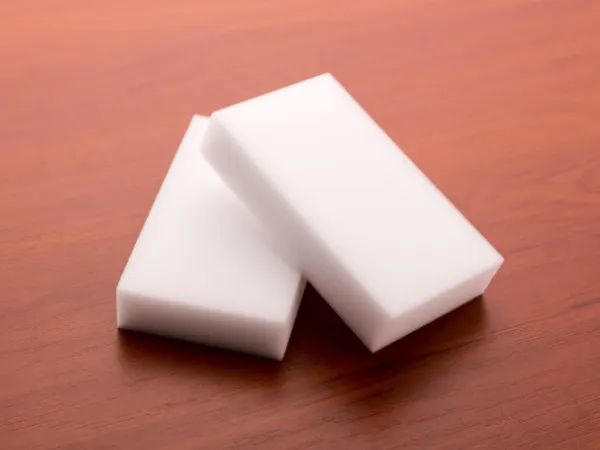
The cleaning principle is equivalent to "micro sandpaper"; physical friction may leave permanent scratches
Many people think tech sponges rely on some magical chemical agent to dissolve stains, but experts point out that its main component is "melamine-formaldehyde resin" (Melamine-formaldehyde foam, MF). Under a microscope, this material has a hard honeycomb structure. When wiped with water, these tiny struts act like extremely fine particles of sandpaper, physically grinding away dirt on the surface of objects.
Because of its abrasive nature, tech sponges are not suitable for all materials. If mistakenly used on smooth, glossy, or protective-coated surfaces, they can easily wear away the surface shine, leaving irreversible dullness and fine scratches.
- Suitable materials (wear-resistant surfaces): ceramic tiles, stone or concrete floors, bathtubs, whiteboards, unpainted plastic, car glass (non-heat-insulation film side)
- Materials to avoid or use with caution (smooth/coated surfaces): lacquered furniture, painted items, mirror-finish stainless steel, electronic screens, non-stick pan coatings, optical glasses, glossy decorative panels
Advice: If you are not sure whether the material of an object is suitable, always test by gently rubbing a hidden corner before use. If the surface gloss becomes dull, stop using it immediately
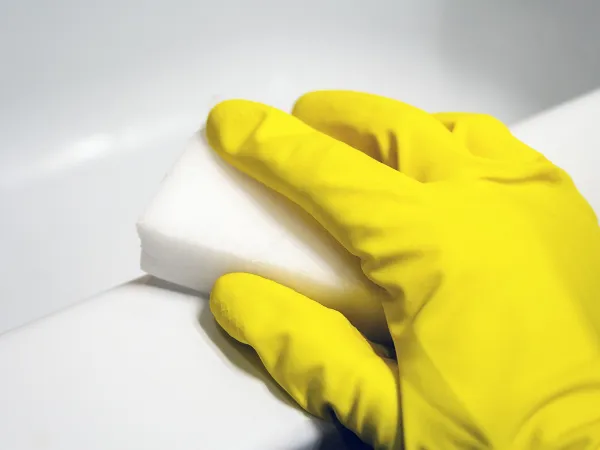
Exposure to heat or acid may release formaldehyde; 3 high-risk situations to avoid
In addition to damaging furniture, improper use of tech sponges may also pose a threat to health. Studies show that tech sponges are relatively stable in room-temperature cold water and during brief wiping; but in extreme environments, their chemical structure can be destroyed, releasing trace amounts of the Group 1 carcinogen "formaldehyde" and the possible carcinogen "melamine."
When cleaning, the following three high-risk situations should be strictly avoided:
- Contact with high temperatures (above 60°C): Never use tech sponges to clean stoves or cookware that have just finished cooking and are still hot, and do not use them with hot water.
- Contact with acidic substances: Do not use them mixed with acidic cleaners such as vinegar or citric acid; a strongly acidic environment will accelerate resin breakdown.
- Contact with grease and strong chemicals: Tech sponges are not suitable for greasy kitchenware, and they should also not be mixed with bleach, otherwise the sponge will deteriorate and crumble.
Avoid 4 common taboos; cutting them smaller is actually a big mistake
Many people often fall into the following operational misunderstandings when using tech sponges daily, which not only affects cleaning effectiveness but also increases health and environmental risks:
- Cutting the sponge at will: Many people cut the sponge into small pieces to clean narrow gaps. But cutting destroys the sponge's original structure, and the newly exposed edges wear down faster, greatly accelerating the release of microplastic fibers. If you need to clean gaps, you should directly buy small-sized products.
- One sponge for the whole home: The types of bacteria in the kitchen and bathroom are different. If the same sponge is used for both, it is easy to cross-contaminate microorganisms and dirt. It is recommended to use separate sponges by area, wash them thoroughly after use, and air-dry them in a ventilated place.
- Using it to wash ingredients or tableware: Tech sponges must never be used to wash fruit, vegetables, or meat. The microplastic fibers produced during abrasion will stick to the surface of ingredients and enter the human body with food. In addition, items that directly contact the mouth, such as baby pacifiers and straws, are strictly prohibited.
- Using it for teeth whitening or skin cleaning: There are online rumors about using tech sponges to remove tooth stains or exfoliate, but experts warn that this is very dangerous. Tech sponges will directly wear away non-regenerating tooth enamel, causing tooth sensitivity and cavities; wiping the skin will scrape away the stratum corneum, leading to broken skin, redness and swelling, or even severe inflammation.
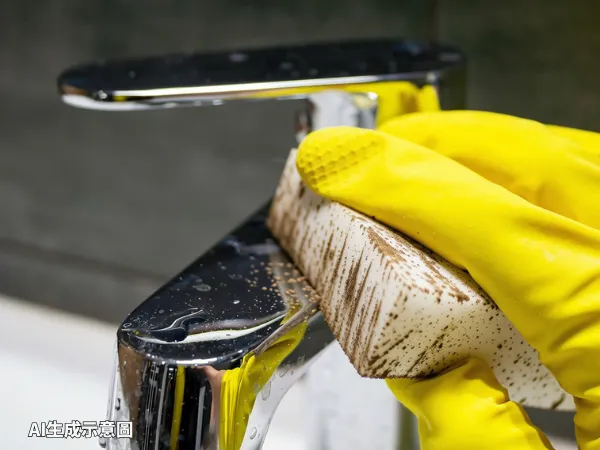
4 correct steps for use and when to replace
Compared with traditional yellow-green sponges, which rely on soft material plus detergent to dissolve grease, tech sponges are more like a specialized tool for stubborn stains. The Consumer Council recommends that the public adopt the principle of "ordinary first, tech later": for daily cleaning, give priority to ordinary cloths or sponges with mild detergent, and only use tech sponges as a "last resort" when encountering stubborn dirt that cannot be removed and the object is wear-resistant.
4 correct steps for use:
- Hidden test: First gently rub an inconspicuous area to confirm it will not scratch the surface.
- Use only cold water: Just dip it in room-temperature water or cold water; never add hot water.
- Wipe gently: Wipe briefly with gentle pressure; avoid excessive force and frantic rubbing.
- Rinse again: After cleaning, it is recommended to rinse the object thoroughly with dish soap and water to reduce chemical and microplastic residue.
When to replace: Tech sponges are consumables and will gradually wear down and release microplastics with use. When the sponge shows obvious wear with broken corners, loses elasticity and becomes soft after pressing, develops mold on the surface, or has been used continuously for about 2 to 4 weeks, it should be discarded into the solid waste bin (never flush it down the sink to avoid polluting the ocean).
From renovation quotations to before and after move-in, one-stop comprehensive support!
>> Get a free renovation quotation:https://hkdecoman.com/measure
>> Book a home clinic (inspection/cleaning/repair):https://clinic.deco-x.com/
Special sections for various housing types:
>> Public housing and Home Ownership Scheme flats https://decoman-publichousing.com/
>> Private housing https://decoman-privatehousing.com/
>> First-hand new developments https://decoman-newproperties.com/
>> Tong Lau and walk-up buildings https://decoman-tenement.com/
================================================================
*** This article is authorized for republication by Deco Man ***