
Table of Contents
How to Remove Mold from Washing Machine Gasket
🎧 Listen to this article
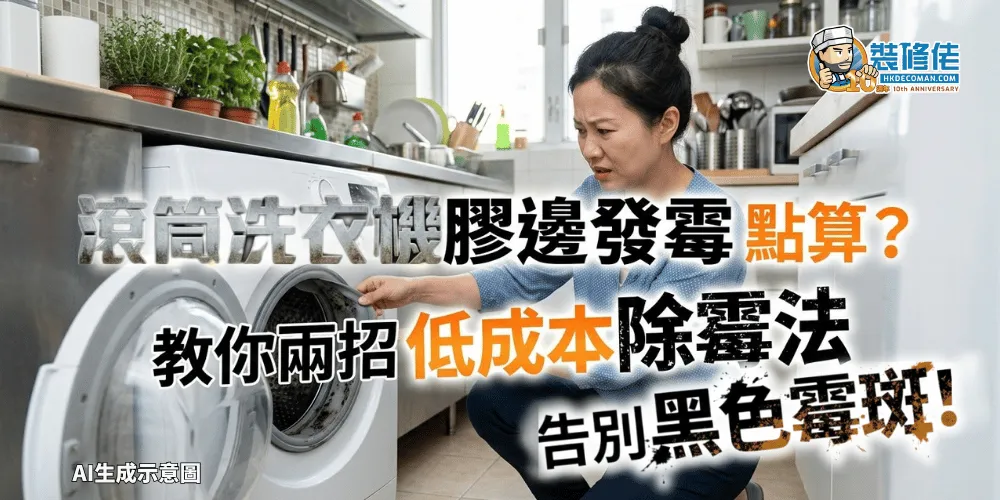
Opening your front-load washing machine only to be greeted by a foul, musty smell, or even discovering that the rubber seal (gasket) around the door is covered in black mold stains that won't come off? Mold on the gasket doesn't just affect its appearance—it also contaminates your clothes. To completely solve gasket mold and odors, the key is to understand the causes, master the correct mold removal steps, and develop daily mold-prevention habits.
Why is the washing machine gasket especially prone to mold?
Although front-load washing machines save water and are gentle on fabrics, the door gasket easily becomes a breeding ground for mold. There are three main reasons:
- Folded structure easily traps water: The multi-layered groove design of the gasket prevents leaks, but it also easily traps residual washing water. If it isn't wiped dry in time, the high humidity inside can last for hours, providing an environment for mold to germinate.
- Detergent and dirt residue: Skin flakes, oils, and fibers shed from clothes, combined with undissolved laundry detergent or fabric softener, form a film on the inner side of the gasket, becoming a nutrient source for mold.
- High local humidity: In spring and summer in Hong Kong, relative humidity often exceeds 80%. If the machine remains sealed for a long time after washing, mold spores will quickly take root and grow.
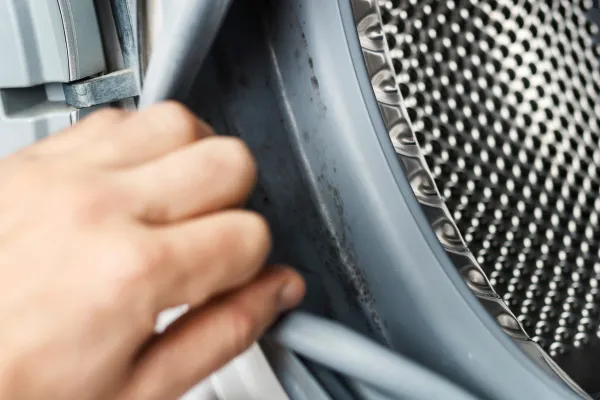
What problems arise if gasket mold is left untreated?
Ignoring gasket mold can create hidden risks for health and appliance lifespan:
- Secondary contamination of clothes and skin allergies: Mold spores attach to clothes with the water flow. Wearing contaminated clothes for a long time can easily cause skin itching, rashes, or allergies, with especially serious effects on young children and the elderly.
- Lingering unpleasant odor: The volatile odors produced by mold metabolism spread throughout the machine, leaving freshly washed clothes with a lingering stuffy, musty smell.
- Gasket aging and damage: Mold hyphae penetrate and damage the rubber structure, accelerating hardening, deterioration, and even cracking of the gasket, ultimately causing door leaks and requiring expensive part replacement.
Two major methods for removing mold from front-load washing machine gaskets
Dealing with gasket mold depends on the severity of the mold, and appropriate tools and steps should be chosen. Below are two cleaning solutions you can carry out at home:
Method 1: Baking soda (suitable for light dirt)
Suitable when only a small amount of dirt or tiny mold spots has just appeared on the gasket surface. Baking soda is mildly alkaline, has good stain-removing and deodorizing ability, and is gentle in nature.
- Mix and apply: Add an appropriate amount of baking soda to a small amount of water and mix into a thick paste.
- Scrub carefully: Pull open the grooves of the rubber seal, evenly apply the baking soda paste to areas with dirt or small black spots, let it sit for about fifteen minutes, then use an old toothbrush or soft-bristle brush to gently scrub the inner side of the grooves.
- Wipe dry and rinse: After cleaning, thoroughly wipe away the remaining powder with a damp cloth, and finally use a dry towel to completely dry the gasket.
Method 2: Diluted bleach (suitable for stubborn mold stains)
When black mold stains have penetrated deep into the rubber tissue, ordinary scrubbing is usually ineffective. At this point, the strong oxidizing effect of chlorine bleach is needed to break down the mold.
- Prepare tools: Wear household rubber gloves and a mask, and open windows or an exhaust fan to ensure indoor air circulation.
- Dilute the bleach: Dilute household bleach with water at a ratio of 1 to 49.
- Wet-compress the black spots: Cut kitchen paper towels into strips, soak them thoroughly in the diluted bleach, and tightly stuff them into the gasket folds and grooves, making sure the paper towels fully adhere to and cover all black mold stains.
- Let it sit and take effect: Keep the wet compress in place for two to four hours (if the black spots are deeply ingrained, it can also be left overnight so the bleach fully penetrates the rubber tissue).
- Clean and run an empty cycle: After removing the paper towels, use a damp cloth to thoroughly wipe away any remaining bleach. (Note: After wiping, you must run an empty rinse cycle to ensure residual chlorine smell and chemicals are completely washed away, so as not to damage clothes washed later.)
Tip: Bleach is corrosive, and using it too frequently will cause the rubber to deteriorate and become brittle. It is recommended only as a deep-treatment method for stubborn mold stains, not as weekly routine maintenance.
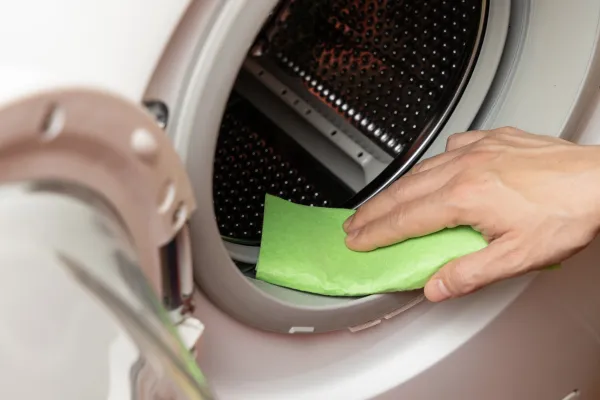
How to maintain and clean the washing machine in daily life?
To prevent the gasket from becoming moldy again, you should develop the following mold-prevention habits and regularly clean the whole machine:
- Keep ventilated and wipe up standing water: After washing, do not close the door. Leave the door and detergent drawer open for one to two hours for ventilation, and casually use a dry cloth to wipe up standing water in the gasket grooves.
- Use an appropriate amount of detergent and remove clothes promptly: Avoid using too much laundry detergent, so residue does not become mold nutrients; after the wash cycle ends, take out clothes to dry as soon as possible.
- Regularly use drum cleaner: Every one to two months, pour an appropriate amount of washing machine drum cleaner directly into the empty drum, run the "Drum Clean" mode or an empty high-temperature wash cycle above 60°C once, and it can thoroughly break down dirt and grease in the inner layers and eliminate the source of odor.
From renovation quotes to before and after move-in, one-stop comprehensive support!
>> Get a free renovation quote:https://hkdecoman.com/measure
>> Book a home clinic (inspection/cleaning/repair):https://clinic.deco-x.com/
Special sections by housing type:
>> Public housing and Home Ownership Scheme flats https://decoman-publichousing.com/
>> Private housing https://decoman-privatehousing.com/
>> First-hand new developments https://decoman-newproperties.com/
>> Tong Lau buildings https://decoman-tenement.com/
================================================================
*** This article is authorized for reposting by Deco Man ***