Table of Contents
Humidifier Guide: Types, Mistakes & Maintenance
🎧 Listen to this article
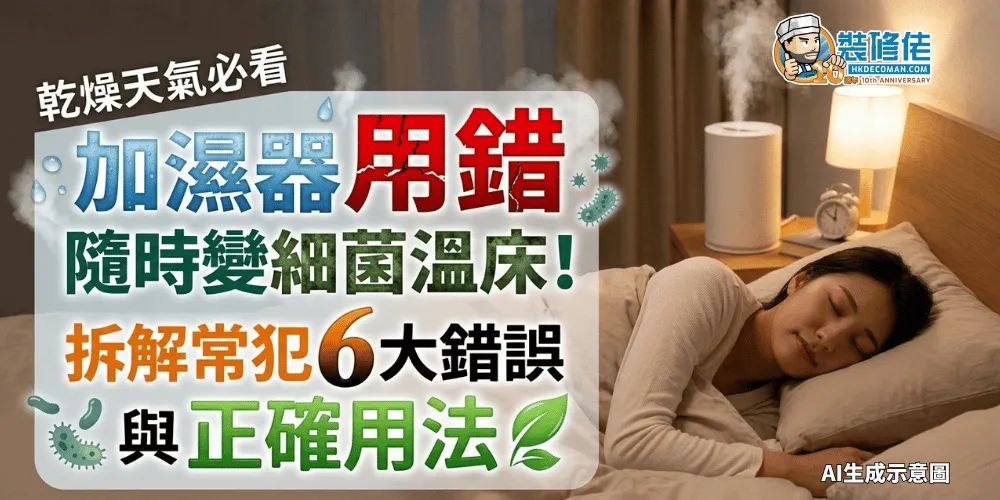
Dry weather in autumn and winter makes dry, sore throats and cracked skin a problem for many people. Humidifiers have therefore become essential small home appliances. However, without an understanding of how humidifiers work or with incorrect usage habits, a humidifier can easily turn into a breeding ground for bacteria and mold, affecting your family's health. Deco Man breaks down the operating principles of humidifiers, common usage mistakes, and proper maintenance tips for you.
Comparison of the Two Main Types of Humidifiers: Ultrasonic VS Mist-Free Evaporative
Home humidifiers on the market are mainly divided into two categories: ultrasonic humidifiers and mist-free (evaporative) humidifiers. The two differ significantly in operating principles, water quality requirements, and maintenance costs:
| Comparison Item | Ultrasonic Humidifier | Mist-Free (Evaporative) Humidifier |
|---|---|---|
| Operating Principle | Uses high-frequency vibration to break water into fine mist that is blown out | Mimics natural evaporation; air passes through a moist filter to carry away moisture |
| Visibility of Mist to the Naked Eye | Visible mist | No visible mist |
| Water Quality Requirements | Very high (distilled/purified water recommended) | Lower (tap water can be used) |
| White Powder Phenomenon | If tap water is added, white mineral powder is easily produced | No white powder produced |
| Consumables and Cost | Lower unit price, no consumables | Higher unit price, requires regular filter replacement |
| Suitable Scenarios | Small spaces with a limited budget and use of distilled water | Children's rooms, areas with hard water, large spaces seeking even humidification |
Buying Advice: If your budget is limited and you are used to buying purified water, you can choose the ultrasonic type; if you want to save the trouble of buying distilled water, or if there are elderly people or infants at home, the mist-free evaporative type is the safer choice.
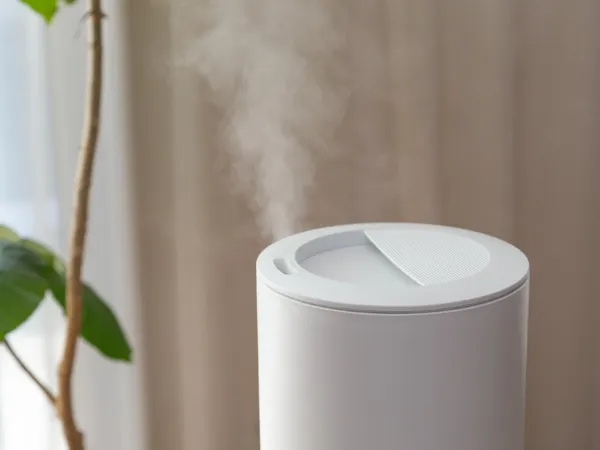
Ultrasonic humidifier
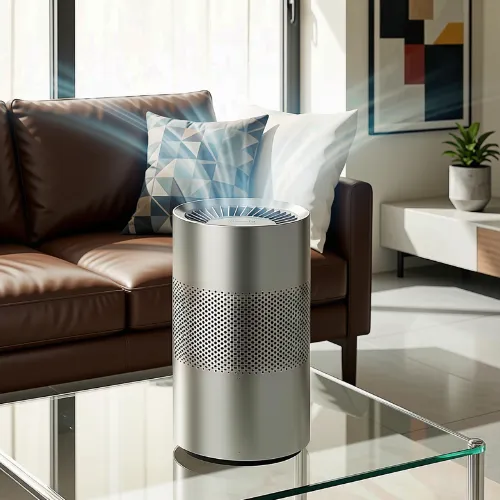
Mist-free (evaporative) humidifier
6 Major Usage Mistakes That 90% of People Have Made
Many people often overlook details when using humidifiers for convenience or in an attempt to "use one machine for multiple purposes." Here are the 6 common mistakes:
- Filling directly with tap water:Tap water contains minerals such as calcium and magnesium as well as trace residual chlorine. After atomization, the minerals form fine white powder that settles on furniture; trace bacteria in the water also spread with the mist and are inhaled into the respiratory tract. Distilled or purified water is recommended.
- Adding essential oils directly into the water tank:Many people like to add essential oils to the water tank and use it as an aroma diffuser. However, ultrasonic humidifiers atomize the essential oil components, and direct inhalation may irritate the respiratory tract; in addition, the oils in essential oils can corrode the plastic of the water tank, damaging the machine's structure and breeding bacteria.
- Running the machine 24 hours non-stop:Indoor humidity is not better the higher it is. When humidity stays above 60%, walls and furniture easily grow mold and dust mites, and excessively high humidity may also make people feel chest tightness and discomfort. It is recommended to keep indoor relative humidity between 40% and 60%.
- Neglecting regular cleaning of the water tank:Long-term standing water in the tank easily forms a slippery "biofilm" on the inner walls. If not cleaned regularly, every time the machine is turned on it is equivalent to spraying mold and bacteria directly into the indoor environment.
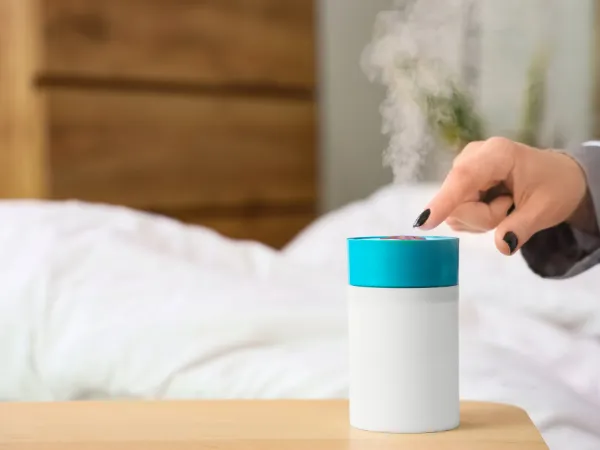
- Placing the unit too close to furniture or electrical appliances:Mist can cause moisture damage to appliance components and cause wooden furniture to grow mold. In addition, if the humidifier is placed near a window, temperature differences will affect the humidity sensor, preventing the machine from accurately controlling humidity.
- Pointing the nozzle directly at the face:The mist particles emitted by the humidifier cannot be directly absorbed by the skin; when the mist evaporates on the face, it actually takes away the skin's original moisture, making the skin drier; at the same time, direct blowing can easily cause respiratory discomfort.
Best Placement and Cleaning & Maintenance Guide
To achieve the best effect and protect health, the following placement and maintenance principles should be followed:
- Place off the ground:Place the humidifier on a stable platform 0.5 to 1 meter above the floor to help moisture spread evenly.
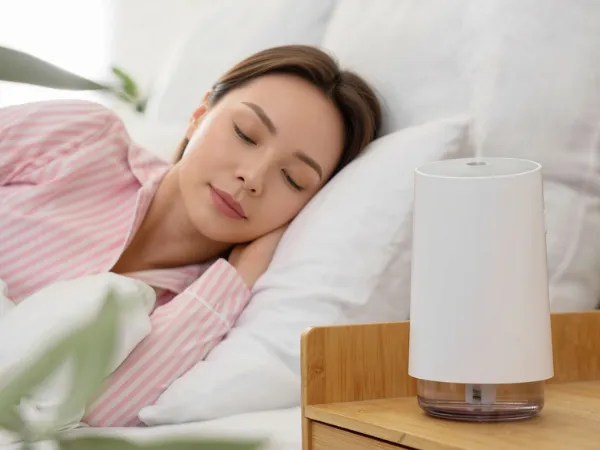
- Maintain a safe distance:The machine should be at least 1 meter from the side of the body and at least 30 cm from walls and furniture. Avoid operating the machine toward your head while sleeping, and it is recommended to set a timer to turn it off.
- Clean thoroughly every three days:Empty the old water before each refill. When cleaning, use warm water with soap or neutral detergent; never use strong chemical disinfectants or bactericides, to avoid residues being atomized and inhaled.
Humidifier FAQ
Q1: Can I add disinfectant to the humidifier to sterilize or purify the air?
A1: Absolutely not. After disinfectant (such as bleach or chemical bactericides) is added to the water tank, the machine will atomize the chemical components into fine particles and spray them out. Inhaling these chemical particles will irritate the respiratory mucosa and may even harm the lungs. When cleaning the humidifier, turn off the machine, scrub with mild soapy water, rinse completely and dry; never leave disinfectant in the water tank while running.
Q2: Does the humidifier need to have its water changed every day?
A2: Yes. Even if there is water left in the tank, it should be completely poured out and the tank wiped dry before adding fresh water, to prevent standing water from becoming a breeding ground for bacteria.
Q3: When the air conditioner or heater is on, how long is it most appropriate to run the humidifier?
A3: It is not recommended to run it continuously for more than 4 to 5 hours. When indoor relative humidity reaches 50% to 60%, it can be paused, and windows should be opened regularly for ventilation.
From renovation quotes to before and after moving in, one-stop comprehensive support!
>> Get a free renovation quote:https://hkdecoman.com/measure
>> Book a home clinic (inspection/cleaning/repair):https://clinic.deco-x.com/
Special sections by housing type:
>> Public housing https://decoman-publichousing.com/
>> Private housing https://decoman-privatehousing.com/
>> First-hand new developments https://decoman-newproperties.com/
>> Tong Lau buildings https://decoman-tenement.com/
================================================================
*** This article is authorized for reprint by Deco Man ***