

Table of Contents
Color-Absorbing Sheets: Benefits and Hidden Risks
🎧 Listen to this article

Separating dark and light clothes when doing laundry often takes time, water, and electricity. In pursuit of efficiency and to save time on washing clothes in separate batches, "color-absorbing sheets" (also known as anti-dye-transfer sheets) have become popular in recent years, claiming that simply adding one or two sheets to the wash allows you to safely mix clothes of different colors in one machine. What is the mechanism behind this seemingly convenient laundry aid? And if used improperly, what hidden risks could it pose to home appliances?
How Anti-Dye-Transfer Sheets Work
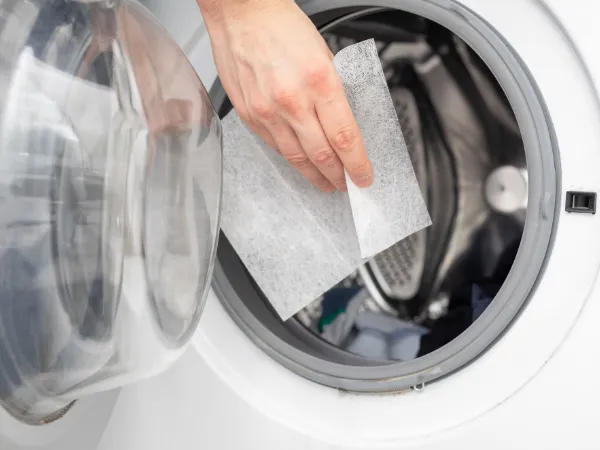
The key to color-absorbing sheets preventing cross-contamination of clothes lies in a specially treated chemical component on their carrier—"Polyquaternium."
During the washing process, water-soluble dyes with lower color fastness (such as reactive dyes or direct dyes) are released under the action of water temperature and water flow, forming free dye molecules with a negative charge. The polyquaternium structure contained in the color-absorbing sheet has a strong positive charge. When the two come into contact in water, through the principle of positive and negative charges attracting each other, they quickly capture and firmly lock onto these free dyes, preventing the pigments from redepositing onto other light-colored fibers.
Why Reusing Them May Backfire
Some users, motivated by environmental concerns or thrift, try to dry used color-absorbing sheets and reuse them, but this is extremely unfeasible in terms of chemical principles.
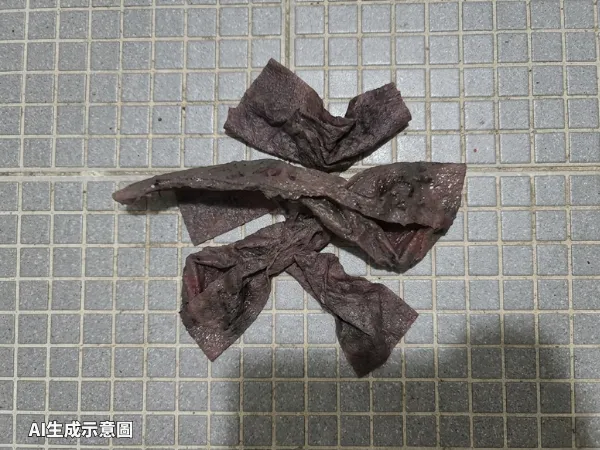
Color-absorbing sheets are single-use consumables. The number of chemical functional groups on their fabric surface is fixed. When the sheet becomes saturated with dye and visibly changes color, it means its charge adsorption sites have been completely saturated. A saturated color-absorbing sheet not only cannot continue to capture new free dyes, but may also release the already locked dyes back into the water during subsequent washing due to violent agitation of the water flow or the alkaline environment of detergent, causing the risk of secondary dyeing of originally clean clothes.
Potential Risks of Incorrect Use
In addition to chemical considerations, the physical form of color-absorbing sheets also poses challenges to the operating environment of washing machines, especially in front-loading (drum) washing machines.
There is a certain mechanical gap between the drum and the outer tub of a front-loading washing machine, and it is equipped with a rubber door seal. Because color-absorbing sheets are extremely thin and very light, during high-speed rotation and strong drainage, they can easily be drawn by the water flow into the edge of the door seal or the gaps of the drum. When the sheets enter the interior of the machine, they tend to remain in the following locations:
- Drain filter (debris outlet):Blocks water flow, causing the machine to display an error code and stop operating.
- Drain pump impeller:Paper fibers entangle the impeller, which may cause the motor to overheat and burn out.
- Bends in the drain hose:After multiple sheets accumulate, they absorb impurities and lint, forming a solid blockage, causing backflow or water accumulation in the machine.
By contrast, although top-loading (impeller-type) washing machines have fewer gaps, if the sheets are sucked under the bottom turntable, they will likewise increase bearing wear.
3 Major Principles for Using Color-Absorbing Sheets
To make the most of the convenience of color-absorbing sheets while protecting your washing machine at home, it is recommended to follow these maintenance rules in daily use:
- Check the quantity:Record the number of color-absorbing sheets used when loading clothes, and after washing, be sure to count and confirm the matching number before discarding them. Once you find a discrepancy in quantity, immediately check the rubber seal or debris outlet, and do not take it lightly.
- Use with a fine-mesh laundry bag:Place the color-absorbing sheets in a tightly woven mesh laundry bag, then put them into the drum together. This method does not affect water flow or chemical adsorption at all, while completely preventing the sheets from being flung into the gaps of the machine by high-speed centrifugal force.
- Assess fabric characteristics and sort reasonably:The adsorption capacity of color-absorbing sheets is limited. For brand-new dark jeans, wool, or natural fiber clothing that easily fades severely, the safest approach is still to return to the basics and wash dark and light clothes separately, reducing risk from the source.
From renovation quotations to before and after move-in, one-stop comprehensive support!
>> Get a free renovation quote:https://hkdecoman.com/measure
>> Book a home clinic (inspection/cleaning/repair):https://clinic.deco-x.com/
Special sections for various housing types:
>> Public and subsidized housing https://decoman-publichousing.com/
>> Private housing https://decoman-privatehousing.com/
>> First-hand new developments https://decoman-newproperties.com/
>> Tong Lau and Western-style buildings https://decoman-tenement.com/
================================================================
*** This article is authorized for republication by Decorator ***