
Table of Contents
Correct Wall Mold Removal: Avoid Bleach & Alcohol
🎧 Listen to this article
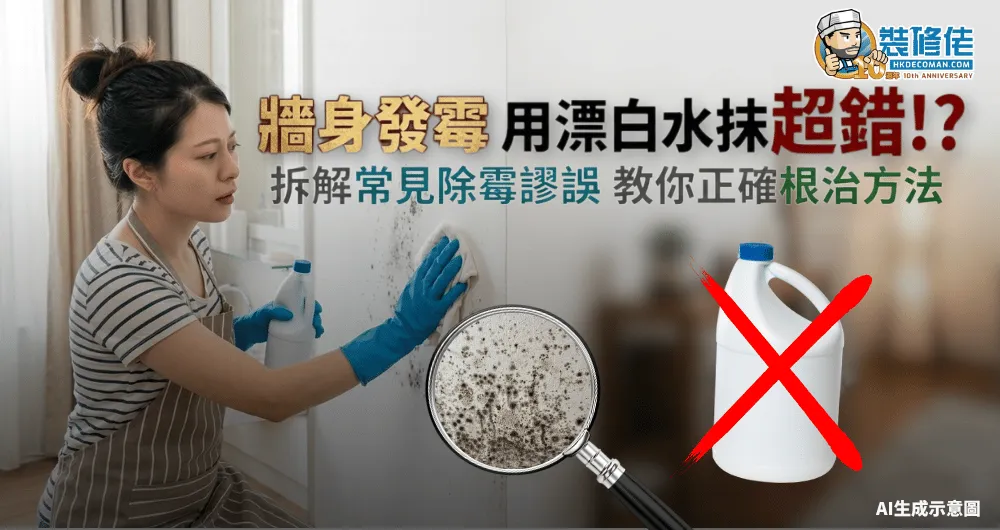
In humid environments, walls in homes often become breeding grounds for mold. When facing black spots on the walls, many people habitually grab bleach or alcohol to wipe them off, but this often backfires. So what is the correct approach? Let Renovation Master debunk common mold removal myths and explain the correct steps.
Wall Mold: Why Is It Always "Treating the Symptoms, Not the Root Cause"?
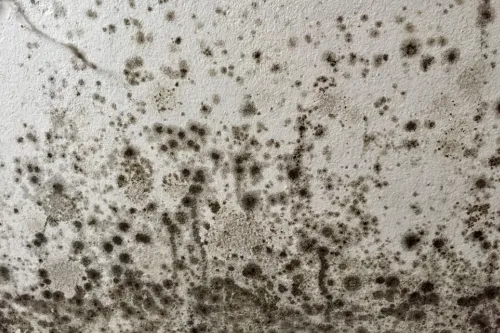
Many people think wall mold is simply due to humid weather, but mold formation actually depends on three elements: "humidity," "air," and "organic matter." When there is a temperature difference indoors—for example, opening windows immediately after turning off air conditioning—the humid and warm outdoor air meets the cold wall surface, condensing into tiny water droplets, like the condensation on a cold drink cup. These water droplets combine with organic matter hidden in wall materials (such as vegetable glue putty commonly used in old renovations), creating an ideal environment for mold growth. If the connection among these three elements is not broken, the mold problem will keep recurring.
Two Common Taboos in Mold Removal
The following two common mold removal methods in the market should be avoided as much as possible:
- Do not use bleach: Although bleach can remove surface mold stains, it lacks deep penetration and cannot reach the mold roots deep in the wall. More importantly, the chemical components of bleach can damage the paint film, causing wall discoloration, noticeable color differences, and even weakening the moisture-proof function of the paint film.
- Avoid alcohol, white vinegar, or baking soda: These household cleaning products are often used for general cleaning but are not suitable for walls. They can dissolve the structure of modern functional latex paint, damaging the original anti-mold protective layer of the wall, making it more prone to moisture and mold growth.
Correct Mold Removal Steps
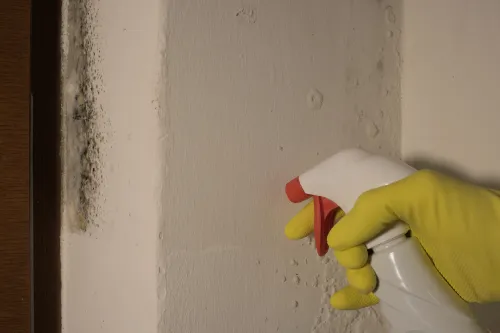
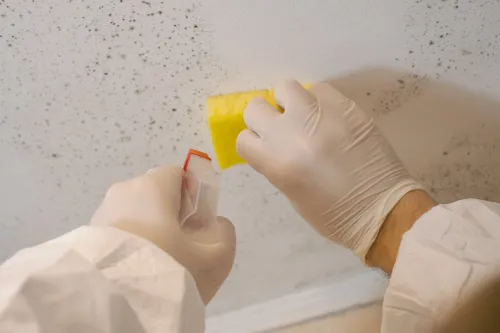
To effectively deal with mold on walls, it is recommended to use a professional anti-mold disinfectant designed for walls. These products usually contain chlorides or oxidizers that can effectively penetrate the paint film and kill mold roots.
- Correct treatment method: It is recommended to spray the mold remover onto a clean cloth or sponge first, allowing the chemical ingredients to penetrate and deactivate the mold, then gently wipe the affected area.
- Targeted product selection: When purchasing products, choose a water-based anti-mold agent that is penetrating and does not damage the paint film. Such products are suitable for both indoor and outdoor use and can effectively inhibit mold regrowth, making them ideal for daily maintenance or wall protection.
Deep Repair: When Mold Has Taken Root in the Wall
If mold reappears shortly after surface cleaning, it indicates that the mold may have penetrated deep into the wall substrate, and surface sprays alone cannot address the root cause. In such cases, a more thorough repair method is required:
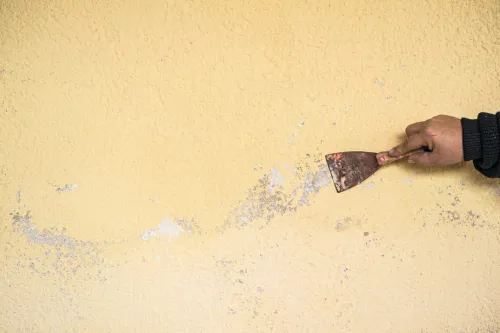
- Remove the damaged layer: Use a paint scraper to remove the paint and plaster base eroded by mold. This is the only physical method to eliminate the mold roots from continuing to grow.
- Base treatment: Spray the exposed wall surface with professional mold-killing solution for thorough sterilization.
- Replastering: After the mold-killing solution has dried thoroughly, it is recommended to apply a sealer to enhance adhesion, then use "putty powder" (without vegetable glue) to level the surface. Because putty powder contains no organic matter, it does not provide nutrients for mold, making it key to long-term mold prevention.
- Final coating: Once the plaster base is completely dry, reapply latex paint with mold-resistant properties.
▶️ Go to Decoration Mall to buy more moisture-proof products now
Daily Mold Prevention Strategies
In addition to dealing with existing problems, daily air conditioning is also key:
- Air conditioning control: Before turning off the air conditioner, it is recommended to switch to fan mode for ten minutes to allow indoor air and wall temperature to slowly balance, reducing the risk of condensation.
- Humidity management: On extremely humid days, avoid opening windows during damp periods like morning or evening. The bathroom should have the exhaust fan running constantly, but if outdoor air is more humid than indoor, it is recommended to close windows and use a dehumidifier.
- Cleaning habits: In the bathroom environment, after showering, hang the shower curtain hem high to dry, and regularly rinse the rubber strips around the sink with water to reduce the accumulation of organic matter such as skin flakes and soap scum, cutting off the mold's food source.
[Editor's Choice Articles]
From decoration quotes to pre- and post-move-in, comprehensive one-stop support!
>> Get a Free Decoration Quote: https://hkdecoman.com/measure
>> Book a Home Clinic (Inspection/Cleaning/Repair): https://clinic.deco-x.com/
Specialized sections for various housing types:
>> Public Housing https://decoman-publichousing.com/
>> Private Housing https://decoman-privatehousing.com/
>> New Properties https://decoman-newproperties.com/
>> Tenement Buildings https://decoman-tenement.com/
================================================================
*** This article is republished with permission from Decoration Master ***