

Table of Contents
Front-Load Washer: Avoid Damage with Proper Loading
🎧 Listen to this article

Commonly known as the "big-eyed" front-loading washing machine, with its space-saving and versatile features, has become the preferred choice for many households. However, most people may not know that using a front-loading washing machine isn't just about tossing clothes in randomly. Incorrect clothing placement order and habits can not only affect washing effectiveness but may also lead to mechanical wear, water leakage, and even shorten the washing machine's lifespan over time. Decoration Man combines professional advice from washing machine manufacturers to detail the correct steps for placing clothes, helping you maintain your beloved machine and avoid unnecessary repair costs.
Can Randomly Placing Clothes "Break the Machine"?
Completely different from traditional top-loading washing machines, the washing principle of front-loading machines involves rotating the drum to lift clothes to a high point and then using gravity to "beat" them for cleaning. Due to its unique horizontal drum design, improper clothing placement can cause a series of issues. The most common risks include:
- Water Leakage and Damage to Door Seal: If clothes (especially small items) get caught between the door and the rubber seal during washing, it can prevent the door from sealing completely, causing leaks. Over time, clothes rubbing and squeezing the seal during drum rotation may lead to its rupture, resulting in costly repairs.
- Abnormal Vibration and Noise: If clothes are concentrated on one side of the drum or become tangled into a ball due to incorrect order, it can disrupt the drum's balance. This causes severe vibration and loud noise during high-speed spinning, putting extra strain on the motor and shock absorption system, accelerating component aging.
- Impact on Cleaning and Drying Efficiency: Overcrowded or tangled clothes prevent them from fully tumbling and beating inside the drum, affecting detergent penetration and reducing cleaning effectiveness. Similarly, during drying, tangled clothes hinder hot air circulation, prolonging drying time or leaving damp spots after drying.
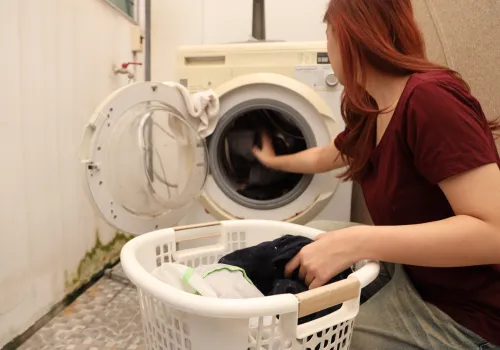
Correct Order Step One: Place Small Items First and Use Laundry Bags
To fundamentally avoid the above issues, the first step is to start with the smallest items. According to official advice from a Japanese home appliance manufacturer, socks, underwear, handkerchiefs, and other small-volume clothes should be placed at the deepest part of the drum.
The key to this step is to prevent these small items from moving toward the front of the door during washing due to water flow and drum rotation, potentially getting stuck in door gaps or drainage holes. For optimal protection, it is strongly recommended to place these small items in laundry bags first. When purchasing laundry bags, note that their size should not be too large; styles with sides less than 40cm are ideal. Overly large laundry bags can form a big "clothing ball" in the drum, causing imbalance and affecting washing performance.
Correct Order Step Two: Place Large Items Later, Acting as a "Protective Cover"
After small items are properly placed at the back of the drum, you can then add larger items like T-shirts, pants, shirts, towels, and bedsheets. Placing these larger items on top of the small ones acts as a "protective cover" or "protective layer."
During washing, this "protective cover" effectively prevents the inner small items (along with laundry bags) from moving forward, ensuring they stay securely at the back of the drum. This simple order not only protects machine components but also helps all clothes distribute and tumble more evenly in the drum, improving overall washing effectiveness.
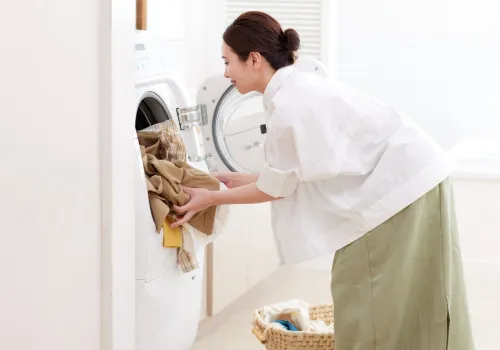
One Extra Step Before Closing the Door: Ensure All Clothes Are Fully Inside the Drum
After placing the clothes, don't rush to close the door and start. Before closing the door, be sure to perform a simple but crucial check: gently push all clothes further into the drum with your hand and look around the door edge to ensure no clothes or threads are caught between the door and rubber seal. This action takes only seconds but is the most direct and effective way to prevent leaks and protect the seal.
Basic Washing Principle: Avoid Overloading, Distribute Evenly
Besides focusing on placement order, controlling the laundry load is equally important. Each front-loading washing machine's manual specifies its maximum capacity; try to adhere to it. Overloading severely compresses space inside the drum, preventing clothes from performing effective "beating" actions, naturally reducing cleaning power. Overloading is also a major cause of severe shaking and noise. When placing clothes, try to distribute them evenly around the drum rather than piling them all on one side, helping the washing machine maintain good balance from the start and operate more smoothly and stably.
【Editor's Picks】
From renovation quotes to before and after moving in, comprehensive one-stop support!
>> Get Free Renovation Quote: https://hkdecoman.com/measure
>> Book Home Clinic (Inspection/Cleaning/Repair): https://clinic.deco-x.com/
Specialized Sections for Various Property Types:
>> Public Housing https://decoman-publichousing.com/
>> Private Buildings https://decoman-privatehousing.com/
>> New Developments https://decoman-newproperties.com/
>> Tenement Buildings https://decoman-tenement.com/
================================================================
*** This article is reprinted with permission from Decoration Man ***