
Table of Contents
Is Your Power Strip a Hidden Fire Risk?
🎧 Listen to this article
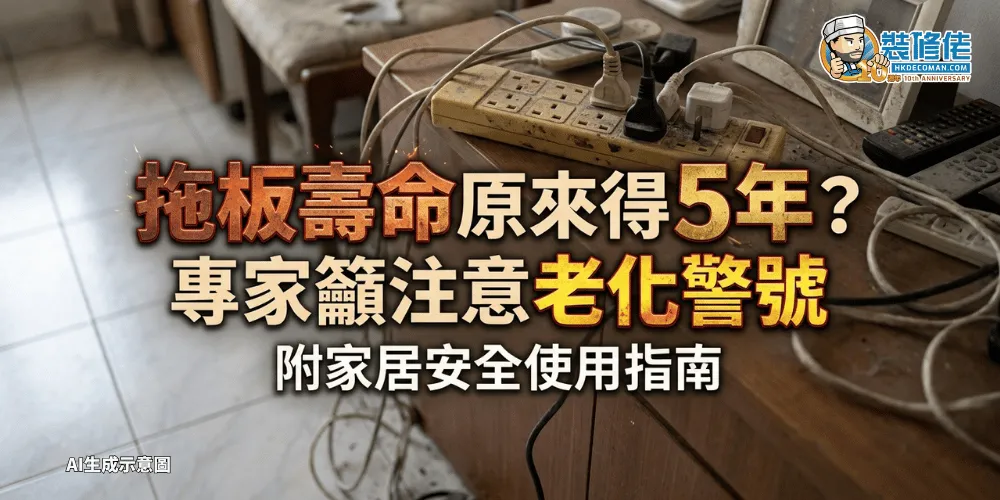
Modern people carry many electronic devices, from phones and tablets to various small home appliances, and the fixed wall sockets are often insufficient. To make it easier to draw power, almost every Hong Kong household has a power strip extension tool fully plugged in in the living room corner or by the bedside. However, how long has the power strip in your home been used? I believe many people's answer is "used for seven or eight years, or even ten years, and kept using it as long as it still works."
In fact, a power strip is not a durable item that can be used forever, but a consumable with a service life. According to electrical safety experts, the golden safe service life of a power strip is generally about 5 years. Beyond that period, even if the appearance looks intact, the internal wires and contacts may have already begun to age, harboring risks of overheating, electric shock, and even fire.
Why do power strips "age invisibly"?
Many people think that buying a power strip from a well-known brand means it will last forever, but Taiwan's "Fire Safety Deity" page points out that even for major brands, every time a plug is inserted and removed, it causes slight wear to the internal metal clips, gradually oxidizing the contact surface.
In addition, Hong Kong's climate is humid for long periods, and moisture in the air easily accelerates the oxidation of internal metal components. When metal oxidizes, the resistance of the contact surface increases, and when current passes through, it generates more heat. When this heat accumulates over a long time in the narrow internal space, it causes the insulation layer to become brittle and the wires to deteriorate. Because this process is very hidden, users often find it hard to notice until high temperatures suddenly cause a short circuit and ignite the outer plastic shell, which can turn into a home fire within seconds.
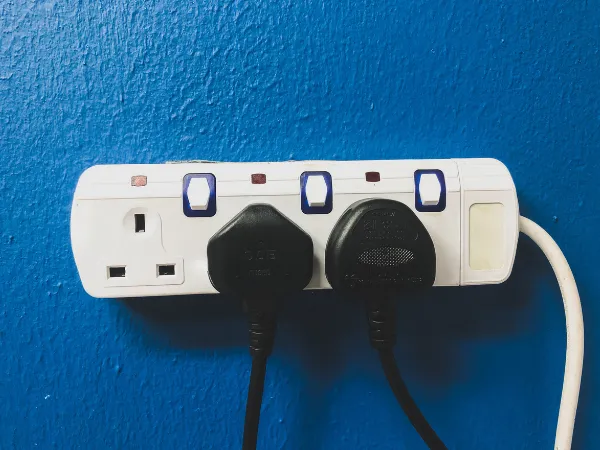
Watch out for abnormal warning signs of power strips
In addition to referring to the service life, the surrounding environment and daily usage habits also affect the speed of power strip wear. Based on official Panasonic Japan and expert recommendations, if any of the following conditions appear in a power strip, it means the internal structure has been damaged and it must be stopped from use and replaced immediately:
- Loose socket, lacking a tight fit: When the plug feels unusually loose and easy to wiggle when inserted into the power strip, it means the internal metal sheets have lost their elasticity. Poor contact greatly increases resistance and makes it very easy for high temperatures to accumulate.
- Unexplained heat or becoming hot: When the power strip is used normally and not overloaded, but the body, plug, or wire feels noticeably warm or even hot to the touch, it indicates that the internal insulation layer has aged or the metal has severely oxidized.
- Wire insulation becoming hard or damaged: After the outer rubber is heated or ages, it loses elasticity and becomes stiff, and may even develop fine cracks, greatly increasing the risk of leakage and electric shock.
- Unstable power supply or abnormal appliances: When the wire is moved, connected appliances flicker or briefly lose power; or charging speed alternates between fast and slow, indicating that the internal wires have broken or have poor contact.
- Discoloration marks on the plug or socket holes: If yellowish, discolored, or even scorched black marks appear on the power strip casing or around the socket holes, it means serious overheating or small electrical arcs have occurred at that location.
- Bent or melted plug metal prongs: Deformed plug metal prongs damage conduction performance, and forcing them into use only accelerates internal short circuits.
Daily habits and safety rules to extend the life of a power strip
To protect home safety, in addition to regularly replacing power strips, correcting improper daily usage habits is equally important. The following daily rules can effectively extend the product's safe service life:
- Plug and unplug power correctly: When removing a plug, hold the plug body firmly with your hand and pull it out vertically. Never pull the wire, and do not wiggle it left and right while pulling it out, otherwise it can easily damage the internal metal structure and wire connection points.
- Never bundle or press heavily on wires: Hong Kong homes have limited space, and many people like to bundle up excess wire or press it under cabinets or in foot-traffic areas. When wires are bundled, heat dissipation is poor and heat easily accumulates and burns them; being pressed by heavy objects can cause the internal copper wires to break.
- Avoid using in humid environments: In humid spring weather, power strips should be kept as far as possible from bathrooms, kitchen sinks, or places prone to splashing, and never touch sockets with wet hands.
- Never overload: Avoid connecting multiple high-power appliances to the same power strip at the same time. When purchasing, choose power strips that meet the Electrical and Mechanical Services Department's safety standards.
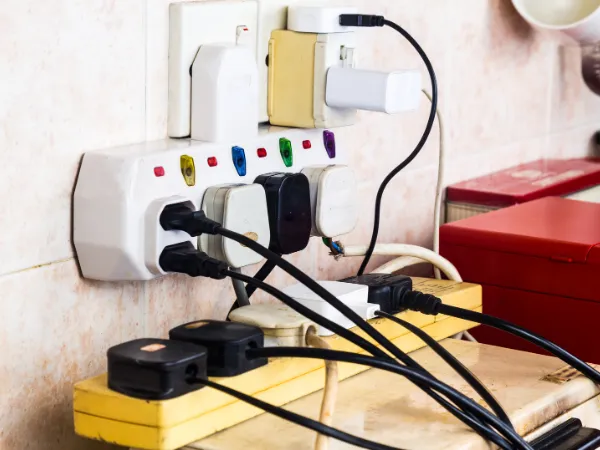
Emergency handling when appliances spark
If you unfortunately see sparks or even fire from a power strip or plug, do not try to directly pull out the wire with your hands or put out the fire with water, otherwise severe electric shock can easily occur. The correct approach is to turn off the main power switch in the home, cut off the power supply, and then deal with it; if the fire gets out of control, shout for help immediately, leave the scene, and call the police for assistance.
From renovation quotes to before and after move-in, one-stop comprehensive support!
>> Get a free renovation quote:https://hkdecoman.com/measure
>> Book a home clinic (inspection/cleaning/repair):https://clinic.deco-x.com/
Special sections for various housing types:
>> Public housing and Home Ownership Scheme flats https://decoman-publichousing.com/
>> Private housing https://decoman-privatehousing.com/
>> First-hand new developments https://decoman-newproperties.com/
>> Tong lau and Western-style buildings https://decoman-tenement.com/
================================================================
*** This article is authorized for republication by Decorator ***