
Table of Contents
Sealed AC Rooms: The Hidden CO2 Danger
🎧 Listen to this article
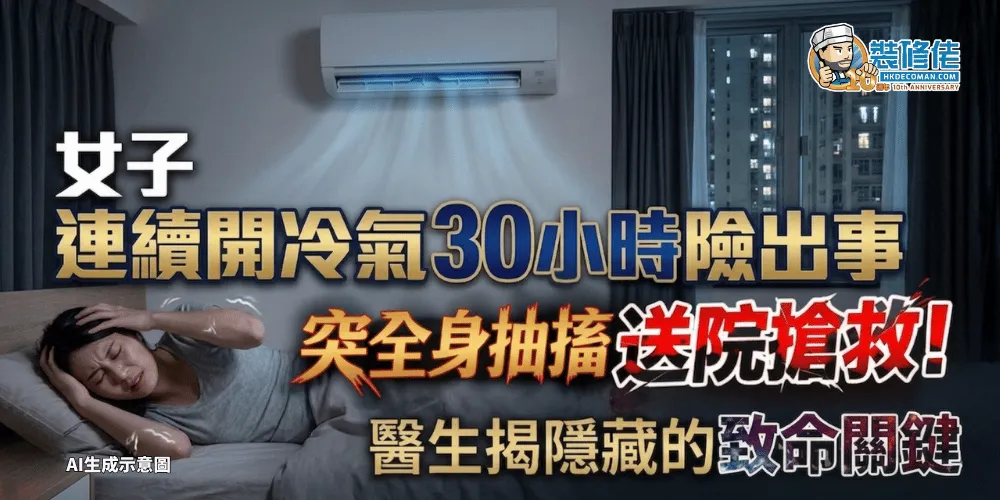
In the scorching summer, many citizens habitually keep their doors and windows closed all day and turn on the air conditioner to escape the heat. However, staying in a completely sealed air-conditioned room for a long time can trigger unexpected health crises at any moment. Recently, an emergency case occurred in mainland China. A woman, in a sealed room with the air conditioner running continuously for more than 30 hours, gradually developed symptoms such as dizziness, nausea, bodily numbness, and full-body convulsions. After being sent to the hospital for emergency treatment, doctors diagnosed and confirmed that the culprit was not the air conditioner itself, but rather the prolonged lack of air convection, which caused indoor carbon dioxide levels to severely exceed the standard, thereby inducing hypoxic brain damage and respiratory alkalosis.
Hypoxia Warning Signs in Prolonged Sealed Spaces
According to emergency clinical records, after staying continuously in a sealed air-conditioned room for about a full day, the affected woman initially only experienced dizziness, head fullness, and mild nausea. Because the symptoms were extremely similar to general fatigue or the commonly known "air-conditioning sickness," the patient once took painkillers on her own in an attempt to relieve them, but the situation did not improve. As time passed, the oxygen deprivation in her body continued to worsen, and the patient developed weakness and numbness in her limbs. On the way to the hospital for emergency treatment, her condition rapidly deteriorated to stiff hands and feet, facial numbness, and inability to speak. Upon arrival at the hospital, she was in a state of full-body convulsions and blurred consciousness.

Image source: China Press
The attending physician pointed out that the patient's blood carbon dioxide concentration was too high at the time, causing an imbalance in blood acidity and alkalinity, which triggered "respiratory alkalosis" and acute brain hypoxia. After immediate high-flow oxygen therapy for about two hours, the patient's various physiological indicators gradually returned to stable levels. This type of case reflects that when the human body is exposed to a high-concentration carbon dioxide environment for a long time, the initial symptoms are often insidious and very easily misdiagnosed or ignored. If air circulation is not detected and improved in time, the condition can deteriorate sharply within a short period.
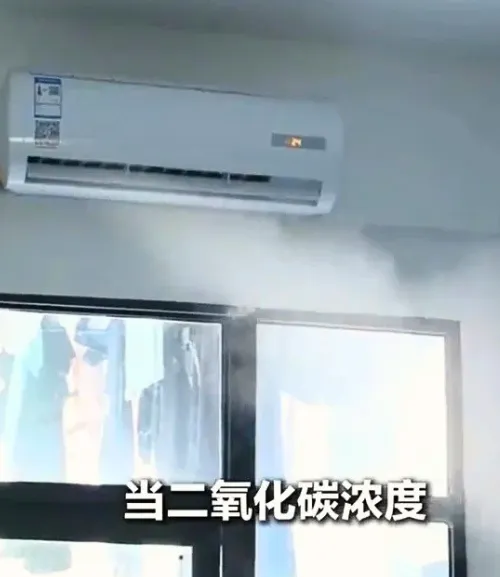
Image source: China Press
The "Internal Circulation" Operational Limitation of Household Split-Type Air Conditioners
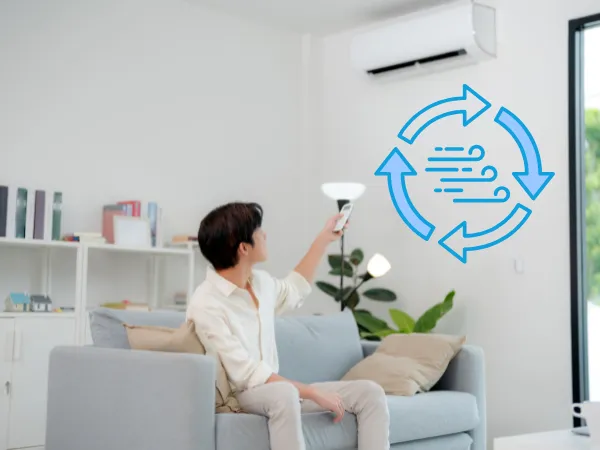
Many citizens have a common misconception: they think air conditioners can draw fresh outdoor air into the room. However, at present, the vast majority of household split-type air conditioners in Hong Kong and mainland China operate on the core principle of an "internal circulation system." During operation, the air conditioner uses the indoor unit to draw in the existing air in the room, cools it through the evaporator and filters it through the filter, and then blows the cooled air back into the room. Throughout this process, it does not introduce fresh outdoor oxygen at all.
Therefore, when the room's doors and windows are completely shut, the total amount of indoor air is constant. People indoors are constantly consuming oxygen and exhaling carbon dioxide. Without external air exchange, indoor carbon dioxide concentration will inevitably rise in a stepwise manner over time, while the oxygen proportion correspondingly decreases. Especially in cases where the room area is small, occupancy density is high, or multiple people stay at the same time, the speed of air quality deterioration will accelerate.
Indoor Carbon Dioxide Concentration Indicators
According to the "Indoor Air Quality Standards" commonly referenced internationally and in Hong Kong, the recommended 1-hour average indoor carbon dioxide concentration should be maintained at 1,000 ppm or below. At this level, the air is fresh and human breathing is smooth. Once the concentration is too high, it will have a significant impact on the central nervous system and physiological functions:
| Carbon Dioxide Concentration (PPM) | Ambient Air Quality Rating | Physiological Effects and Symptoms on the Human Body |
|---|---|---|
| Less than 1,000 ppm | Good / Fresh | Smooth breathing, high overall comfort |
| 1,000 – 1,500ppm | Slightly decreased | Sensitive groups begin to feel stuffy and mildly fatigued |
| 1,500 – 2,000ppm | Significantly elevated | Most people experience fatigue, dizziness, difficulty concentrating, and slowed reactions |
| 2,000 – 3,000ppm | Severely exceeding standard | Triggers obvious headache, head fullness, nausea, palpitations, and chest tightness |
| More than 3,000ppm | Dangerous level | Suppresses central nervous system function, may cause respiratory alkalosis, muscle convulsions, and coma |
Home Air Conditioning Safety Guide
Many citizens think that as long as they turn on an air purifier at home, they can ensure air quality while keeping doors closed and the air conditioner on. This is actually a common misconception. The core operating principle of an air purifier is to filter suspended particles in the air (such as dust mites, dust, dander, or some odors) through a HEPA filter or activated carbon. However, it does not have a gas conversion function, cannot eliminate carbon dioxide, and cannot create oxygen out of thin air. To truly eliminate the hidden danger of oxygen deprivation in sealed spaces, the key still lies in "physical air exchange."
In daily use of air conditioning, the following targeted preventive measures can be taken:
- Open windows regularly for ventilation: After the air conditioner has been running continuously for 2 to 4 hours, doors and windows should be opened regularly for 5 to 15 minutes for ventilation. If the indoor space is relatively small or many people are staying there, the frequency of opening windows for ventilation should be increased, allowing outdoor air with high oxygen content to replenish immediately.
- Adopt "micro-ventilation" measures: When sleeping with the air conditioner on all night, there is no need to shut the windows tightly. It is recommended to leave a tiny gap of about 2 to 3 centimeters in the window, using the natural airflow generated by the temperature difference to drive micro-circulation of air. This can keep the room cool while preventing nighttime carbon dioxide concentration from rising.
- Reasonably adjust temperature and mode: It is recommended to set the air conditioner temperature at around 26°C and make good use of "Sleep Mode" at night. This can avoid cold air blowing directly on the body and inducing blood vessel constriction, while also saving on electricity costs.
- Maintain body water balance: In an air-conditioned environment, the air is extremely dry, and the body's water loss will unknowingly accelerate. Continuously replenishing water helps promote blood circulation and can significantly alleviate dizziness and fatigue caused by poor air circulation.
From renovation quotations to before and after moving in, one-stop comprehensive support!
>> Get a free renovation quotation:https://hkdecoman.com/measure
>> Book a home clinic (inspection/cleaning/repair):https://clinic.deco-x.com/
Special zones for various housing types:
>> Public housing and Home Ownership Scheme flats https://decoman-publichousing.com/
>> Private housing https://decoman-privatehousing.com/
>> First-hand new developments https://decoman-newproperties.com/
>> Tong Lau buildings https://decoman-tenement.com/
================================================================
*** This article is authorized for republication by DecoMan ***