
Table of Contents
Stop Washing Machine Damage: Use Laundry Bags Correctly
🎧 Listen to this article
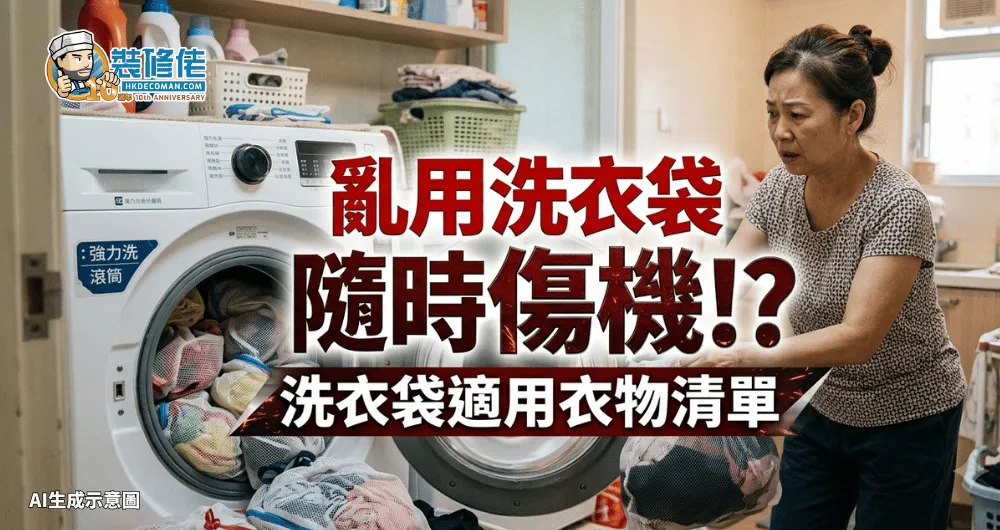
In daily household chores, using laundry bags is quite common. To protect clothes, many people are accustomed to putting all sizes of garments into laundry bags before tossing them into the washing machine. However, if laundry bags are used incorrectly, they not only fail to achieve the expected garment protection effect but may also cause chronic damage to the internal structure of the washing machine, shortening the appliance's lifespan.
How do laundry bags become a hidden crisis?
Many people notice that sometimes the washing machine makes unusually loud noises during the spin cycle, which may be caused by the laundry bag. When we stuff a large amount of clothes or heavy items into the same laundry bag, the mesh bag becomes extremely heavy after absorbing water. During high-speed spinning, this dense bag is pushed to one side of the inner drum due to centrifugal force. Because the water and weight are not evenly distributed around the drum, the laundry bag becomes a huge "unbalanced center of gravity" inside the drum. Under conditions of hundreds of revolutions per minute, the inner drum begins to shake violently due to imbalance and continuously crashes into the outer drum and the entire machine body. Prolonged exposure to such impacts increases the burden on the washing machine's internal shock absorption system and metal bearings. Although modern smart washing machines have balance sensors that attempt to adjust automatically, long-term operation in this unbalanced state accelerates component wear.
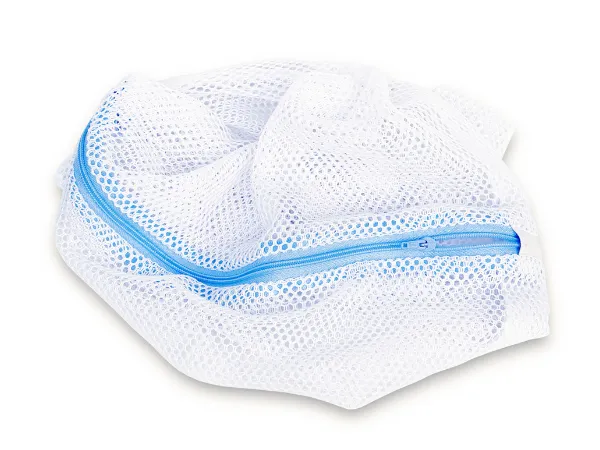
Consequences of overstuffing a laundry bag
One bad laundry habit is stuffing a whole basket of dirty clothes into one large laundry bag. This practice not only causes the aforementioned damage to the machine but also brings two additional consequences:
- Significant drop in cleanliness: The core principle of washing clothes is to rely on sufficient water flow to penetrate the fibers, and to remove dirt through the mutual slapping and friction between clothes. When all clothes are tightly packed into one mesh bag, the space for movement between clothes is compressed. At this point, the laundry detergent and water flow cannot effectively penetrate the innermost layers of clothes, resulting in greatly reduced cleaning power.
- Mutual staining due to friction: When a large number of different colored clothes are squeezed and agitated at high speed in a small mesh bag, the fabric fibers experience high-intensity tight friction. Without sufficient water flow to rinse and dilute, if any piece of clothing has slight color fading, the released dye will directly transfer and stain adjacent light-colored clothes.
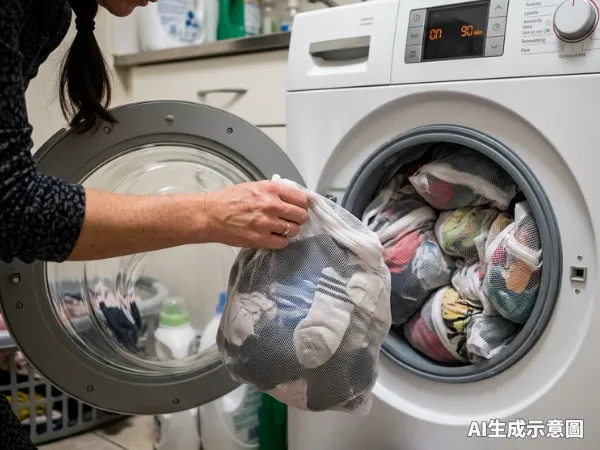
Bag-Free Principle: Not All Clothes Are Suitable for Laundry Bags
The laundry bag is essentially just a barrier against physical pulling. Ordinary T-shirts, sportswear, or towels washed directly without a bag are actually cleaner. Especially for front-loading (drum) washing machines, which operate by tumbling clothes up and down, blindly using laundry bags or washing thick heavy blankets can actually interfere with the machine's balance sensing.
4 Types of Clothing That Must Be Used with Laundry Bags
To properly utilize the laundry bag, we must learn to classify precisely. Only clothes with fragile structures that are prone to damage, or those with destructive accessories, should be placed in a mesh bag for isolation and protection.
- Delicate and easily deformable soft fabrics: For example, silk garments, knitwear, wool, lace clothing, and tulle skirts. The fibers of these garments are very fragile. Under high-speed agitation in the washing drum, they can easily have their fibers snagged by other rough fabrics or be stretched out of shape. Placing them in a laundry bag can effectively reduce this physical friction.
- Clothing with long straps and cords: Some hoodies, sweatpants, or dresses often have long drawstrings. During the washing and spinning process, these long cords can easily intertwine and tangle with other clothes, leading to knots and pulling. Therefore, it is recommended to straighten the cords and place them in a mesh bag.
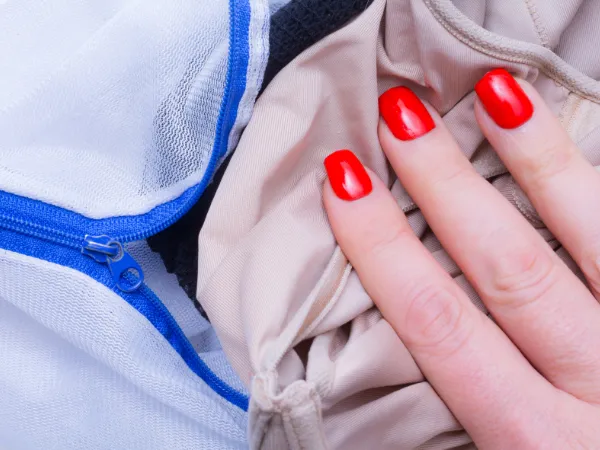
- Metal zippers and hard hooks: Metal zippers on jeans, snap buttons on jackets, and metal clasps on women's underwear. These hard accessories can easily scratch the mesh inner drum of the washing machine or directly snag and damage nearby soft clothes. Before placing such items in a laundry bag, first zip up the zippers and fasten the buttons, then put them in the bag for washing.
- Fine accessories with sequins and beads: Garments with special prints, handmade beads, or special decorations. Although hand washing is ideal for such valuable clothing, if machine washing is necessary, they must be wrapped in a fine-mesh laundry bag to reduce friction with other fabrics and minimize the chance of accessories falling off.
Daily Operation of Laundry Protector Bags
To protect your clothes while also maintaining your washing machine, it is recommended to follow these three tips for daily use:
- Mix mesh bags with loose clothes: During a single wash cycle, avoid filling the entire drum with laundry bags. The correct approach is to mix "bagged laundry bags" with "unbagged regular daily clothes" in the drum. The loose clothes freely distributed in the drum can effectively spread around during high-speed spinning, providing good cushioning and balancing the overall load.
- Choose mesh bags close to the garment size: When selecting laundry bags, bigger is not always better. Placing a small amount of clothes in an oversized bag allows excessive tumbling in loose space, which can worsen stretching and deformation. Conversely, a bag that is too small will compress the clothes. The ideal is to choose a mesh bag close to the garment size, with a principle of "one bag for only one or two items."
- Reserve one-third of space: Ensure at least one-third of the bag's space is left empty, allowing clothes room to tumble moderately and contact water flow.
From renovation quotes to before and after move-in, comprehensive one-stop support!
>> Get a free renovation quote: https://hkdecoman.com/measure
>> Book a home clinic (inspection/cleaning/repair): https://clinic.deco-x.com/
Special zones for various property types:
>> Public housing https://decoman-publichousing.com/
>> Private housing https://decoman-privatehousing.com/
>> First-hand new properties https://decoman-newproperties.com/
>> Tenement buildings https://decoman-tenement.com/
================================================================
*** This article is reprinted with permission from 裝修佬 ***